Making the most of an Ayahuasca Ceremony
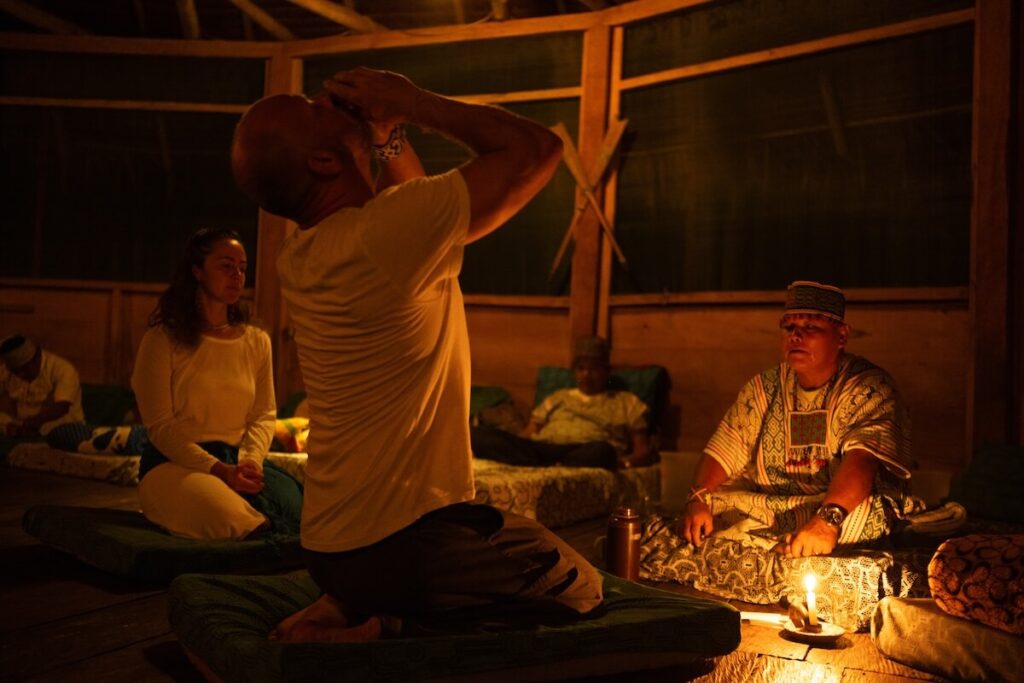
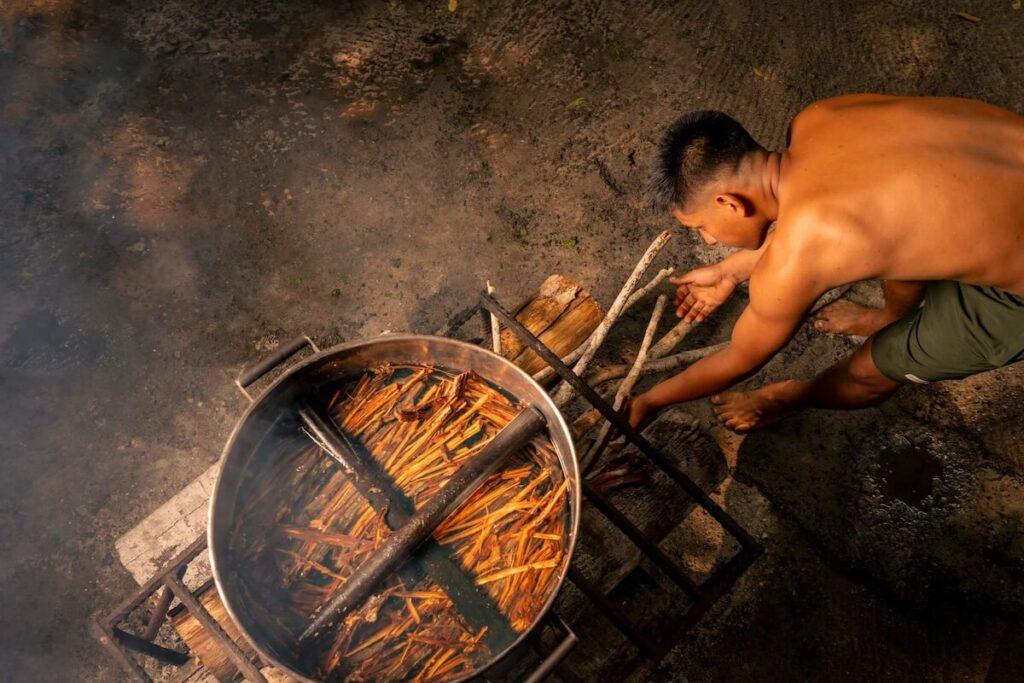
What is Ayahuasca? Ayahuasca is the centerpiece of the Amazon’s ecosystem of ancestral plant medicines. Made by brewing together two plants —ayahuasca vine and chacruna leaf— for approximately eight hours, Ayahuasca is a powerful medicine for the body, but also for the mind, the heart and the soul. Physically, once ingested, the Ayahuasca liquid enters and purifies every bit of your body from the tip of the head to the tip of the toes: the brain, the heart and all organs, the nerves, and even the blood. Ayahuasca also energetically enters the compartments of your mind, namely the mental psychology, emotional function, memory, five senses and sleep and dream space. There, the medicine removes traumas, blocks and other negative energies and brings strength and opening as needed. With help from experienced shamans, Ayahuasca can heal all kinds of diseases: thyroid issues, drug addictions, diabetes, schizophrenia, depression and even cancer, just to mention a few. Spiritually, Ayahuasca is a doorway into the spirit world. The psychedelic trance or mareación that she provides takes you into the spirit world, where the roots of your ailments lie as energies. There, Mother Ayahuasca, the main spirit of the Ayahuasca medicine, guides you, heals you and even empowers you to heal yourself. Through visions and messages, the Mother brings up things from your spiritual weight and gives you opportunities to work through and let go of what you no longer want: emotions, traumas, pains, negative thoughts, blockages, behaviors and so on. In this way, she works with you to help you heal yourself. What is an Ayahuasca ceremony? To treat the medicine with the respect it deserves, we drink Ayahuasca in a ceremonial setting, and to see the visions properly, we drink it at night and in the dark. If we’re new to the medicine, we also drink it in the presence of an experienced shaman. An Ayahuasca ceremony generally has three parts: the set up, the work, and the wind-down. Note that the following description is how ceremony is run at Nihue Rao Centro Espiritual. To begin, every pasajero, one by one, goes up to receive and drink their Ayahuasca brew. The shamans then drink too, the lights are turned off and everyone waits in silence for the effect to arrive. Once the shamans’ effect has opened (30 to 45 minutes in), they take turns to sing their opening songs, to connect to their medicines and prepare for the work ahead. After this, the pasajeros that have no effect are given a chance to drink an optional second dose, helped by a facilitator. Here begins the work of the shamans, and facilitators take pasajeros to sit in front of their respective shamans for their healing song. The facilitator reads the pasajero’s intentions quietly to the shaman, and the shaman begins to sing. Once their 8 to 12 minute ícaro is done, the pasajero is guided back to their mat. This repeats until every pasajero has received their song (or songs, if anyone is also opening or closing a diet). Once everyone has received their ícaro, the ceremony continues in silence until the Maestro announces its closing. This is the wind-down time, and the remaining strength of the medicine should allow for rest. Once the Maestro closes the ceremony, a candle is lit, and everyone is welcome to stay in the maloca for as long as they like, and to converse quietly, sing or play instruments—always respectfully, as Mother Ayahuasca is still in the room and fellow pasajeros might still have a strong effect. Shortly after, the shamans will leave the maloca. Your working dose More Ayahuasca, more healing. Less Ayahuasca, less healing.More Ayahuasca, more visions. Less Ayahuasca, less visions. Maestro Ricardo Amaringo On one side, it’s true that the more medicine you drink, the more healing you will receive from Ayahuasca. On the other, since you will be doing a lot of your own healing, it’s important for you to be able to work comfortably during the effect, and this means staying centered and able to think with clarity while you are in the second stage of the medicine. So, generally, you’ll want to drink the most medicine you comfortably can—that is your working dose; you have a good effect, but you can still make decisions. Your working dose also makes it easier for you to understand the visions. It is your responsibility to find your working dose, the dose that is good for your mind and your body. Maestro Ricardo Amaringo You find your working dose through experience. As you sit for your first ceremony, the shaman will give you a cautious intro dose based on your body build. At the end of the night you should have a feel for how that dose was. If you were underwhelmed or bored, or had too short of an effect or none at all, up your dose a bit the next time. If the effect was overwhelming, too fast or it was generally hard to keep up with Ayahuasca, lower your dose. If it felt just right and you could think clearly, stay calm and converse with Ayahuasca, you found your working dose. Finding your working dose might take a couple of ceremonies and possibly additional guidance from the shaman at integration. Once you have your working dose, you have something safe to default to. If you ever want to drink more it’ll be a conscious choice, and you’ll go in prepared accordingly. Likewise if you want to drink less to rest. If the dose you drank is not enough to produce any effects for you, you have the option of drinking a second, smaller dose approximately one hour after the ceremony starts. Always be careful, though, as this can be unpredictable and prolong your effect until very late. In general, finding your reliable working dose and sticking with it is preferred to drinking a second dose. Mindset To drink the medicine we must bring two thoughts, no more: I’m going to drink Ayahuasca,
Introduction to Ancestral Plant Medicine
The spiritual weight Everything you experience in your life stays with you—spiritually. Traumas, mishaps and addictions alike all remain recorded in your mind and body, manifesting as pains, cluttering your mind and emotions, and blocking your path to the life you desire. This sum of experiences that is the story of your life forms what we call your spiritual weight. If you have consumed drugs or alcohol, the contamination of those substances is still with you. If you were bullied, or abandoned as a child, or abused, those traumas and blocks are still with you. If you have had many sexual partners, their own traumas and blocks are still with you. If you tend to act angrily, that is within you. These are all energies within your spiritual weight, affecting you in ways you might not be aware of. Drinking Ayahuasca, dieting master plants and receiving ícaros or medicinal songs all help you clean portions of this spiritual weight that you carry. They take from you what you no longer want. As your weight lightens, your body, mind and soul can begin to open and heal, and you start to feel lighter, more centered and overall healthier. And if you go deep enough, you can even feel a spiritual rebirth—a new start. The medicinal plants God sowed the medicinal plants on the Earth to help humanity. The Amazonian master plants, of which Ayahuasca is the center of, are a particularly powerful group of them. What these plants do for most people is heal them physically, mentally and emotionally, helping them live a happier life. Put in other words, what they do for most people is help them clean their spiritual weight and emerge out of it. Each plant medicine has its own “specialization”, or its own medicine: there is strength medicine (Shihuahuaco), there is love medicine (Marosa), there is detoxing medicine (Ojé), and so on. Each can bring a particular improvement, or healing, to your life. And then there are medicines that can do a vast amount of things—such as Ayahuasca. What sets plant medicine apart, is that it is spiritual medicine—it works on a spiritual level, acknowledging the fact that, on some level, you are a spirit yourself, and not just your physical body. This allows plant medicine to heal you on every level of your being: physically, but also mentally, emotionally and spiritually. What’s more, these medicinal plants make you more spiritual; more aware of your spirit self and of the spiritual reality you live in. In other words, they connect you to the root of the spiritual world. In that awareness, you can come to interact with the spirits of the medicinal plants themselves, receiving healing and teachings from them. The shaman and the ícaros The Shipibos and other Amazonian tribes have long-known about this ecosystem of medicinal plants, and have had ample time to learn how to work with it. This accumulated learning spanning generations is the healing tradition that we call shamanism. Shamans diet for many years to receive knowledge, power and tools (including but not limited to the ícaros) from the spirits of the master plants themselves, and use these to work within the spirit world. This rigorous life-long training makes the shaman exceptionally strong, wise and agile, as it turns them into a spiritual warrior capable of battling the bad energies face to face—and winning. If they walk their path with integrity, it also makes them caring and kind, moving them to use the powers they receive to do good and work the light—that is, to heal others. To heal you, the shaman sings ícaros, powerful healing songs that clean your spiritual weight quickly and bring order and healing to your body, mind and soul. These songs are medicine themselves; spiritual medicine that enters your body through the sounds of the shaman’s voice. It is the very spirits of their dieted medicines, male and female alike, that come to sing these songs through them. Because the ícaros carry medicine on their own, it’s not even necessary to drink Ayahuasca to receive their benefits. They are, however, significantly more powerful you’re in the Ayahuasca effect. It is worth noting that the word shaman is actually of western origin. The shamans themselves (at least the Shipibos) call themselves onanya, meaning wise or sage. This is an excerpt from “The True Medicine: The Nihue Rao Guidebook to Ayahuasca and Master Plant Diets.” You can read the full guidebook here.
Testimony of the initiation of Maestro Amaringo
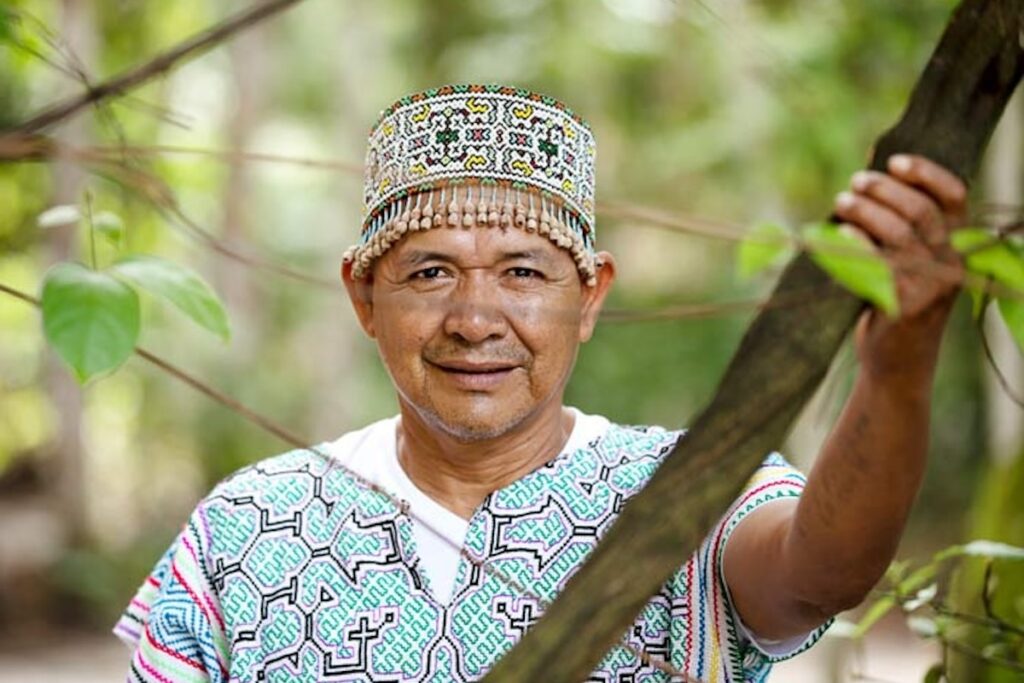
We share a brief testimony of the ayahuasquero master Ricardo Amaringo collected by the Shipibo communicator Policarpo Sanchez. The career of Maestro Ricardo Amaringo In my visit to the Nihue Rao Spiritual Center, located on the outskirts of the city of Iquitos in the Nanay River basin, I met with brother Ricardo Amaringo Benetillo, “Sani” in Shipibo name, a recognized Shipibo ayahuasquero master, 58 years old, from the Native Community Vista Alegre de Masisea, upper Ucayali. I share below his fascinating testimony of initiation into the world of ancestral knowledge of traditional medicine and the practice of Shipibo shamanism. Maestro Ricardo Amaringo begins this testimony pointing out that he had a childhood and youth with many difficulties, shortages and even of direct affection from his biological parents: his father Raúl Amaringo Benetillo and his mother Ercilia Ahuanari (who died at the age of 30). Due to their lack of knowledge and the impossibility of assuming the responsibilities of his upbringing, they gave him up for adoption to some uncles and aunts so that they could raise him in their family. He continues, saying that: “I was initiated in the first steps of shamanism when I was 14 years old. Before, back in 1980, in the upper Ucayali, as it is part of our culture, I was offered to marry a Shipiba girl of 12 years old or so, which I had to refuse, because my inner self told me that I had to fulfill a mission, so taking on a family responsibility at that time was not yet part of life.” “At the age of 17 I was already taking ayahuasca regularly. But I want to say that before this big step in my life, I was incredulous of shamanism. Like all young people abandoned by my biological parents, being in the city of Pucallpa, I went through the consumption of marijuana and cocaine, I suffered great sufferings, I cried a lot in my loneliness, in those days, in my solitude. I cried a lot in my loneliness, in those moments I resorted to drugs.” With a voice between his throat, half sobbing, Amaringo says: ‘My God, why did you make me like this, I was crying’. I had a lot of hatred for people, for children and young people my age, a lot of resentment.” “In those times I also passed by the house of the teacher Guillermo Arevalo, in Yarinacocha. I saw that his family lived happily, they ate well, his children were in better conditions than me. So, I asked Guillermo Arevalo to teach me shamanism. I am going to think well, he nodded to me. He told me this because he knew that I was at that time a boy with bad thoughts (rami shinanya, in Shipibo).” “Guillermo Arevalo denied me to be my spiritual maestro, my initiator, because he knew that I had bad thoughts. At that time, I thought that the shamans, onanyabo, merayabo, necessarily had to have a maestro initiator, that only through the maestros or through their guidance came the shamanic knowledge. Then, asking other elders, they told me that in the old days, the beginners of shamanism used to diet (samati in Shipibo) without a teacher, but from the power of the master plants themselves, from the properties of the plants (raobo in Shipibo). Of course, obviously the spiritual accompaniment of someone experienced and spiritually ordained for this purpose is needed.” “An adult woman named Maria, told me, start the diet with the plant ‘marosa‘ (name in Shipibo). I began to diet. Great was my surprise, that with the diet of the ‘marosa‘ I forgot the I forgot about drugs, alcohol, it cleared my mind of my mental disturbances. Before I was totally traumatized, I felt tired, bored, lazy (chikishires, in Shipibo).” Master Ricardo Amaringo points out with forcefulness and certainty that thanks to the diet of plants he got rid of his addictions to drugs and mental disorders or mental imbalances. “Samatax ea benxoa iki”, says Don Ricardo Amaringo with a smile on his lips. “My chakra, my mind had blocked, I had so much doubt, distrust, resentment, confusion of my life (shinan tsokax, in Shipibo), I had even reached the thought of suicide. The addiction to drugs has a solution, with the ícaros and the ingestion of ayahuasca can be healed,” says with experience and as a personal testimony, the maestro Ricardo Amaringo. “Ayahuasca and the master plants have transformed me, they have centered my life, ayahuasca itself has cured me, the spirit of ayahuasca itself,” says Master Ricardo Amaringo emphatically. “So, the body, the soul and the spirit are even in conditions to meet the gods. The master and sacred plants take us to the power of God. Then I did Toé diet with white flowers.” “Then I went on a diet with Nihue Rao (name in Shipibo), medicine of the air in Spanish. I had obtained this plant in a creek that passes through the land or mountain where the Tushmo population center is currently located, in Yarinacocha.” “Nihue Rao samati riki nete kepenti“, that is, with this plant the possibilities and powers to find the different worlds of healing and goodness are opened, according to Ricardo Amaringo. “After a year of dieting with these master plants, Guillermo Arevalo found out about it and sent for me. I had told him that I was just initiating myself, but the maestro, Guillermo Arevalo, had already seen me through ayahuasca and considered that I was already in a position to cure or conduct ayahuasca sessions or rituals. So I began to work in Yarinacocha with the master Guillermo Arevalo.” Currently, Mr. Ricardo Amaringo Benetillo is a prestigious ayahuasca master, a renowned spiritual leader, who has been managing for more than 15 years the growth and positioning of the Nihue Rao Centro Espiritual, without having studied any major Western academic training. His entrepreneurial success is worthy of astonishment and admiration. He married at 35 years old with Mrs. Dany